

What does home care actually involve?
When people first start considering care for themselves or someone they love, one of the biggest questions is surprisingly simple:
What does home care actually involve?
You might imagine someone arriving several times a day to provide personal care.
And for some people, that is exactly the support they need.
But home care can also be much broader – and much more flexible – than many families realise.
It could mean some help preparing meals. Support getting to an appointment. Companionship during the week. Help with everyday routines. Or simply having someone there who provides reassurance.
The starting point shouldn't be a standard list of tasks.
It should be:
What would make everyday life easier, safer or more enjoyable for this person?
What is home care?
Home care is support provided to someone while they continue living in their own home.
The amount and type of support can vary enormously.
Some people may only need a small amount of help each week, while others need more regular support throughout the day.
Importantly, someone's needs can change over time.
A good care package should therefore be built around the individual rather than expecting everyone to fit the same model.
What can a home carer help with?
Depending on the person's individual needs, home care can include support with:
Personal care
This can include washing, dressing, bathing and other aspects of someone's personal routine.
Personal care should always be provided sensitively, respecting the person's privacy, dignity and preferences.
Meals and everyday nutrition
A carer can help someone prepare meals, make drinks and maintain their normal routines around food.
For someone finding cooking increasingly difficult, even relatively small amounts of support can make a significant difference.
Medication support
Depending on the agreed care plan, support may be available to help someone maintain their medication routine safely.
Companionship
Not every care visit needs to revolve around a practical task.
For someone spending significant amounts of time alone, regular companionship can be enormously valuable.
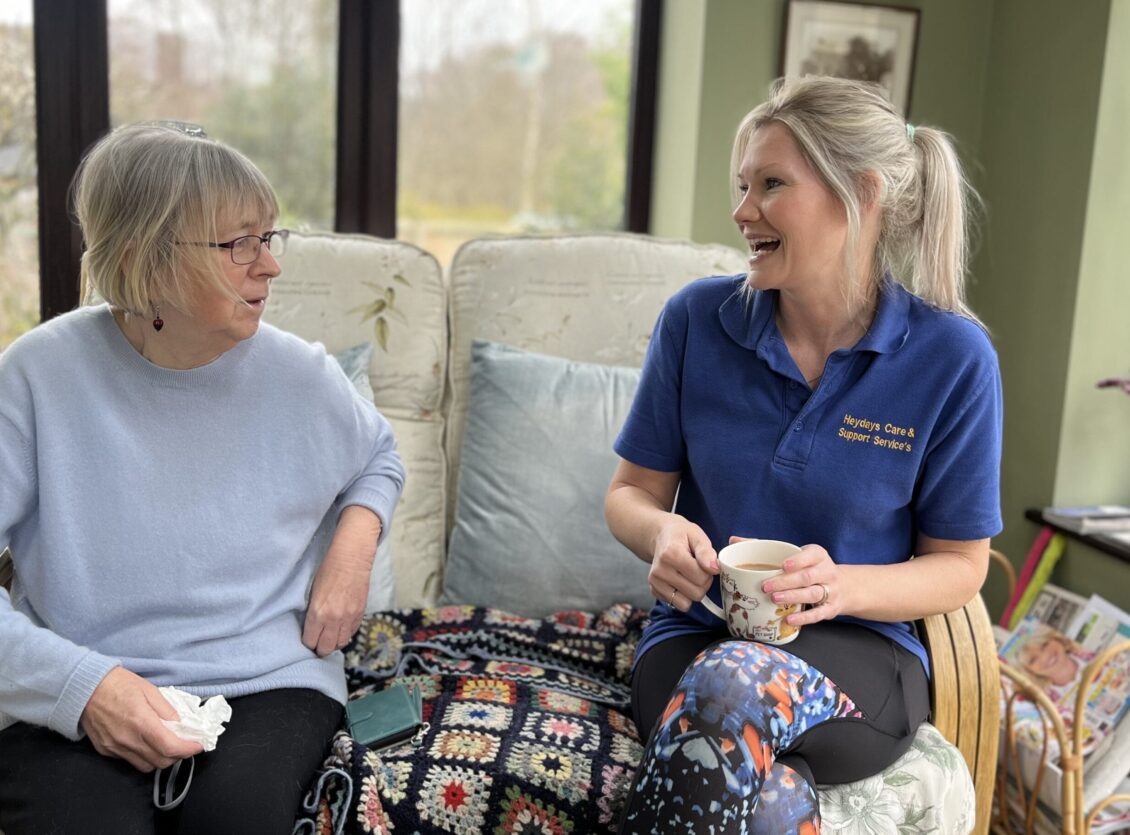
A conversation, cup of tea, shared activity or simply seeing a familiar face can become an important part of someone's week.
Shopping and errands
Home care can help someone continue managing everyday activities such as shopping and other errands when these become more difficult to do alone.
Getting out and about
Remaining independent doesn't end at the front door.
Support might involve going for a walk, attending an appointment, visiting somewhere familiar or continuing with activities someone enjoys.
Maintaining these connections can be an important part of someone's wellbeing.
Everyday support around the home
Some people simply need an extra pair of hands with everyday routines that are becoming harder to manage.
The objective isn't to take over.
It's to provide enough support for the person to continue doing as much as possible for themselves.
Dementia support
Someone living with dementia may benefit from familiar routines, reassurance, companionship and consistent support within the environment they know best.
Care should always be centred around the individual – their history, preferences, abilities and the things that remain important to them.
Support for family carers
Home care can also support the wider family.
If a husband, wife, son or daughter is providing significant amounts of care, having professional support can give them some breathing space and reassurance.
It can also allow family time to feel like family time again, rather than every visit revolving around care tasks.
Does home care mean someone has lost their independence?
No.
This is one of the biggest misconceptions surrounding care.
The purpose of good home care should be to support independence, not replace it.
If someone can prepare breakfast but struggles with their evening meal, support can focus on the evening.
If they can manage perfectly well at home but no longer feel confident going shopping alone, that may be where help is useful.
If companionship is the main need, support can be built around that.
Care doesn't have to take over someone's life.
It should fit into it.
How much home care does someone need?
There's no universal answer.
It depends on the person.
For some people, a small amount of regular support may be enough.
For others, care may be required more frequently.
The important thing is understanding:
- what the person can comfortably do themselves
- where they're experiencing difficulty
- what they want help with
- what family or friends are already providing
- what would help them remain safe and independent.
Support can then be reviewed as circumstances change.
Will someone have to change their normal routine?
Good home care should work around someone's established routines wherever reasonably possible.
That matters.
People have their own ways of doing things – when they get up, what they like for breakfast, where they shop, what television programmes they watch and how they spend their day.
Those things don't suddenly stop being important because someone needs a little help.
At Heydays, getting to know the person behind the care is central to the way support is provided.
What if we're not sure what help is needed?
That's completely normal.
Families don't need to design a care package before speaking to a care provider.
You may simply know that something isn't quite working as well as it used to.
A conversation can help identify where someone is managing well, where they're experiencing difficulty and what kind of support might make a positive difference.
Sometimes that may be less care than you imagined.
Sometimes needs are greater.
The important thing is finding what is right for the individual.
Home care built around real life
At Heydays Care, we provide care and support to people in their own homes across South Cumbria.
Our approach is based around something very simple:
The person comes first.
Their home.
Their routines.
Their relationships.
Their choices.
Their life.
Our role is to provide the right support around those things.
If you are considering care for yourself or someone you love, you don't need to know exactly what you need before contacting us.
Talk to Heydays about care at home →
We’ll listen to what’s happening, answer your questions and help you understand what support could look like.